


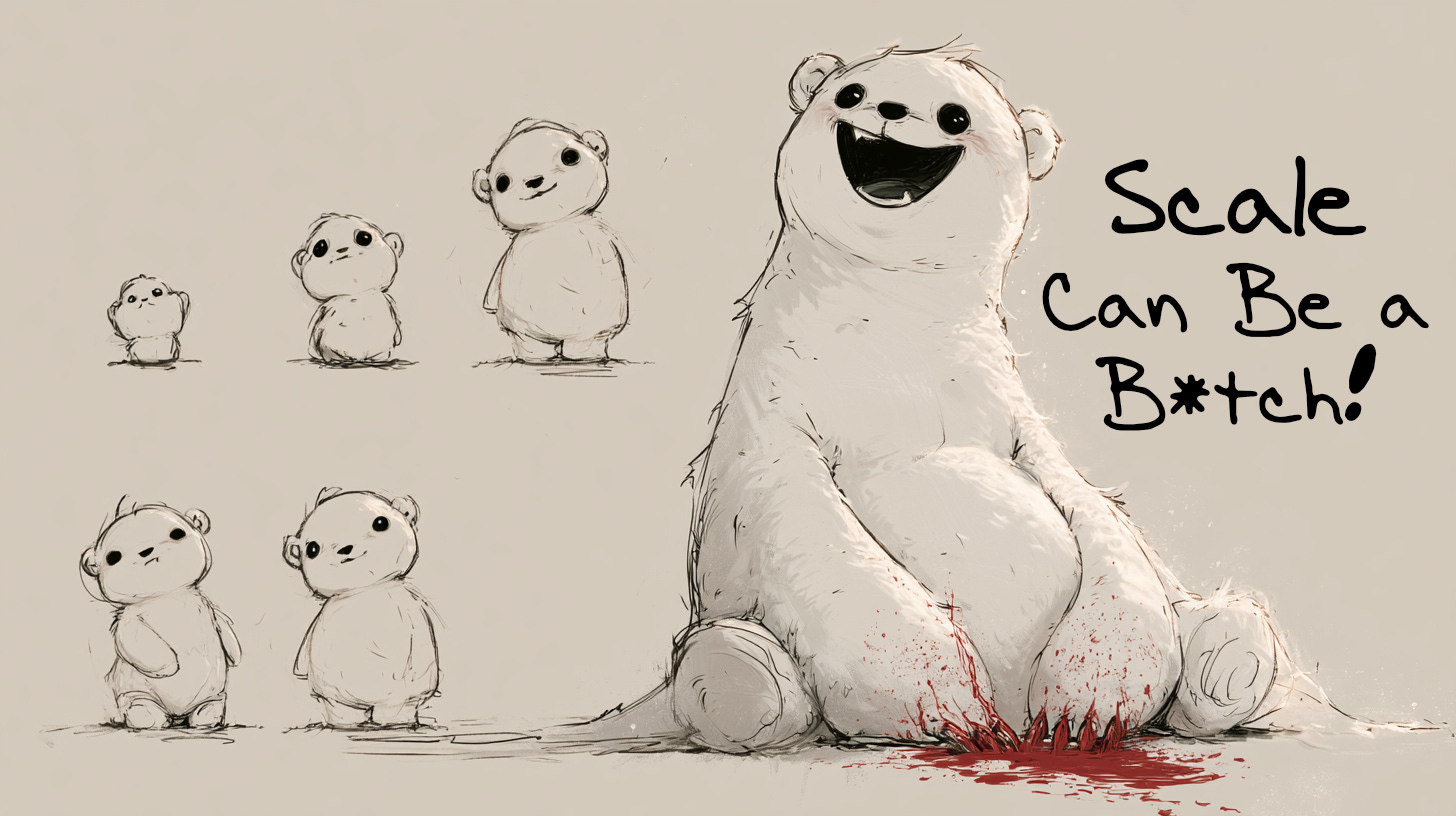
What came before: We grew our new organization, Luna Burn, from two people to 100+ in 5 weeks. Rapid growth teaches lessons that slow growth doesn’t. We hit organizational scale problems almost instantly.
We were barely a week old and already bumping up against structural problems of scale. We’d seen how a single chat couldn’t work for coordinating too many people. Rapid scale forced structure and communication systems.
Organizational scale forces structure, but scaling a customer base forces other things as well.
Scale Makes Anything Possible ... Especially Chaos
The event land could handle 1,500 people. Past events had been that big. But how big should this event be? Insurance and medical services get tricky the more people you have.
More people means we need more of what we do already. We’ll pay more invoices, field more queries, and order more portopotties. But the the crowd quietly brings New Stuff to handle. Not just the need to manage a larger stuff, but genuine New Stuff that only happens with size.
Some things in life happen rarely. But with more attendees, more customers, and more employees, those rare happenings become annoyingly frequent.
One in a hundred customers drops their Turnip Twaddler on a hard floor and it breaks. With 5 customers, you rarely (if ever) get breakage. Everyone treats their Turnip Twaddler with kid gloves. But once you have 5,000 customers, you can expect 50 exchanges.
The customer thinks this is rare. After all, they have never before dropped a Turnip Twaddler. This is a once-in-a-lifetime disaster! To you, however, it happens daily. You might event keep an extra box of Turnip Twaddlers handy to give your customers.
As you grow bigger, you must plan for all those previously rare things that now happen regularly. Customers aren’t getting more careless; you just have so many of them that some rare thing is always happening.
Chaos Reigns Outside
The problem isn’t just clumsy customers. Rare events also become more common with other outside stakeholders. You have more vendors and more funders. Vendors need to be coordinated logistically and in terms of quality. The rise of rare events happens here, too. When you receive 100 parts from a vendor, quality control is relatively easy—you can inspect each one if necessary.
And as for funders... funders need to be managed. Some investors or creditors need regular reporting. Some have a board seat, or an advisory position, or retain the right to examine the books. The more of them you have, the more of their quirks you have to manage, not to mention any political battles that they’re fighting among themselves. Compliance, oversight, and investor management becomes a full-time job.
... and Chaos Reigns Inside
There’s an even worse hidden gotcha (as if that weren’t enough):
Rare events get more common inside the organization. Depending where they happen, those events can do lasting good or inflict lasting doom.
Organizations are amplifiers. If you hire that rare front-line employee who doesn’t care about customers, the worst case is that they alienate a few customers. No biggie.
If you happen to hire that rare vice president of customer service who doesn’t care about customers, the not-caring scales. They create systems, hire employees, and set incentives, all based on not-caring. The more they do, the harder it is to undo. Soon, not-caring is set in stone. It long outlives them, and you end up with an organization where no one treats customers well. Undoing that damage is difficult, if not impossible.
Scale brings rare chaos, and increases the chances of ending up with that unqualified vice president wreaking damage that’s magnified by their role.
Some Rare Things Also Magnify the Damage
We’ve seen so far that size brings rare events, inside and out. Those rare events, which weren’t a consideration before, now need to be dealt with. But while scale increases the kinds of events you need to deal with, it also means that all events can do much more damage.
One of the rare things that happens at an event like a regional Burn is someone deciding to leave and abandon their stuff. Campmates and event staff are left to clean up the mess. Obnoxious, sure. But the burden to the event is small.
Other rare things affect everyone. A few years ago, I was helping with a regional Burn when we were hit by sudden heavy rains. With 20 attendees, we could have tossed our stuff in our cars and left.
But we didn’t have 20 people. We had 1,500 people, each with camping gear and artwork. We had to get them all out of the camping area, down to the parking lot, and onto the small back roads leading to the event. That takes a dozen traffic directors, a logistics plan, and a very high tolerance for upset attendees, who all want to jump to the head of the line to get home.
You can’t evacuate that many people quickly. Just getting cars out of the parking lot takes hours. At that size, you need plans for rare events, and you need contingency plans for extremely rare events if there’s the chance of great damage.
The Roadmap to Scale
While it doesn’t make scale any easier, knowing these “gotchas” of scale can help you plan for tomorrow’s growth phase before you get there. For us, the growth happened so fast that we were always thinking a week ahead ... because growing at roughly 40% each week, every seven days we hit a new gotcha.
If you would like a summary of the ways in which scale changes your business, you can download a copy at https://steverrobbins.com/scaleroadmap2